Search This Blog

Showing posts with label thomas hardy. Show all posts

Saturday, 27 September 2014

Creative Dorset - Augustus John

Augustus John bearing an uncanny resemblance to my father
My four years at art college was wasted on my old pot and pan... real artists wore sandals, shunned soap and lay in an absinthe haze, with a nubile nymphette in each arm. I, on the other hand kept both armpits and nose clean.  

The Bohemian lifestyle invented by the Impressionists was eagerly adopted by Augustus John, Britain's foremost portrait painter, after an encounter with a group of gypsy tinkers, a meeting which began a lifelong obsession with the gypsy lifestyle.  
It was in 1911 John first appeared in Dorset driving a gypsy caravan  and accompanied by an entourage of women, children and hangers-on. They were headed for Alderney Manor, a grandly named crenellated pink bungalow in 50 acres of heathland. 
John was already a celebrated artistic genius, though the less generous attributed this genius to a crack on the nut while at college. Either way, a genius he certainly was. 

T. E. Lawrence
Alderney soon became a mecca for the most notorious creative minds of the era. Visitors whose names read like a who's who, stayed in brightly painted gypsy caravans in the grounds; while the children ran wild through the heath and animals of all shapes and sizes wandered the grounds, even a token monkey made an appearance. 
The creative chaos was presided over by his wife Dorelia, dressed in flowing Pre Raphaelite robes.
It was not just a fertile period for his art, Augustus carried on hoovering up the women as well, even Ian Fleming's mother was counted as a mistress. In fact it almost became de rigeur  to claim to have fathered one of his many children. Some put the number at 100 though a more modest nine were acknowledged. It was said that he patted each child on the head when walking down the Kings Road in case one might be his own.
Thomas Hardy
He meanwhile produced a series of brilliant portraits including those of a couple of the local lights; T. E Lawrence and Thomas Hardy, who commented "I don't know if that's how I look, but that's how I feel," Controversially a portrait of Lord Leverhulme was returned headless because the soap millionaire didn't appreciate the likeness. This caused a global scandal with artists and models going on a one day strike in Paris...presumably refusing to starve in their garrets for twenty four hours.
Nothing lasts, though, and in 1927 the group upped sticks and moved across the border to Fordingbridge in Hampshire.
Alderney Manor, alas, is now no more, having been demolished years ago while Augusus crumbled away in 1961.
The Blue Poole near Wareham
 

Friday, 22 August 2014

Dorset Cycling 5 - A visit to Thomas Hardy's homes


Hardy's birth place at Higher Bockhampton is a picture-postcard thatched cottage, while his home in later years, Max Gate, a rather austere Victorian pile. Designed by Hardy himself it rather proves that he did well to stick to the day job. Both are owned by the National Trust and lie close to Dorchester.
Being just a few miles apart it is possible to walk or cycle between the two, along the footpaths and lanes that Hardy must have walked many times visiting the family cottage.

Max Gate
This off and on-road route passes through the grounds of Kingston Maurward, a beautiful Palladian mansion, now an agricultural college, and past the Old Manor, an exquisite late Elizabethan mansion, available for B&B.
From Max Gate you can stroll through Dorchester to the County Museum which holds a collection of Hardy memorabilia including his writing desk.

Distance around 7 miles there and back.


Wednesday, 20 August 2014

Dorset Museums-Gold Hill Museum Shaftesbury


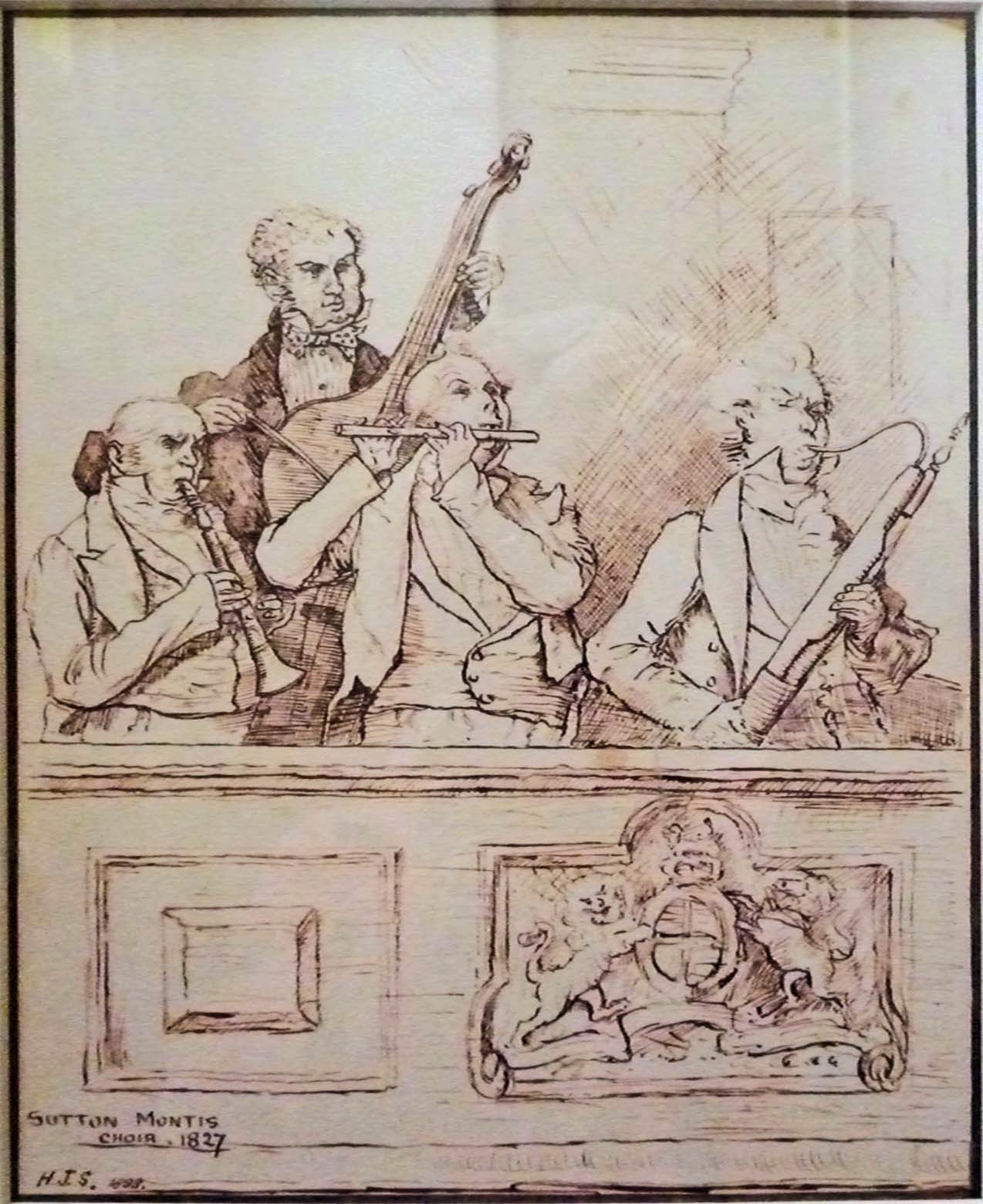
There was a time when this wiggly-woggly instrument, called for obvious reasons, a serpent, was a mainstay of the long defunct village church orchestra. The serpent and orchestras were swept way with the onslaught of new-fangled harmoniums and organs by the Victorians.

By Thomas Hardy's time they had already become the stuff of nostalgia as this piece from 'Under the Greenwood Tree' testifies...
'Times have changed from the times they used to be,' said Mail, regarding nobody can tell what interesting old panoramas with an inward eye, and letting his outward glance rest on the ground, because it was as convenient a position as any, 'People don't care much about us now! I've been thinking we must be almost the last left in the county of the old string players? Barrel-organs, and the things next door to 'em that you blow wi' your foot, have come in terribly of late years.'

'Ay!' said Bowman, shaking his head; and old William, on seeing him, did the same thing.

'More's the pity,' replied another. 'Time was - long and merry ago now! - when not one of the varmits was to be heard of; but it served some of the quires right. They should have stuck to strings as we did, and kept out clarinets, and done away with serpents. If you'd thrive in musical religion, stick to strings, says I.'

'Strings be safe soul-lifters, as far as that do go,' said Mr Spinks.

'Yet there's worse things than serpents,' said Mr Penny. 'Old things pass away, 'tis true; but a serpent was a good old note: a deep rich note was the serpent.'

A drawing of the Sutton Montis church orchestra in action in 1827

Friday, 18 July 2014

Dorset churches 4 - St.John the Baptist, Bere Regis


Ghostly outline of a Turberville
The church of John the Baptist dates back to the years before the Norman invasion. It has strong connections with Thomas Hardy whose novel, 'Tess of the D'Urbervilles,' hinges on the fate of Turbervilles who huddle together in the vaults below the church.

Supposed portrait of Cardinal Morton
Its chief glory though, is 
the magnificent medieval roof; a mixture of bold carved roof bosses and near life-sized carvings of the apostles.


It was given by Cardinal Morton in 1485, probably in memory of his parents. The roof is unique.  Stylistically though it has several parallels in Norfolk and to my eye, with the famous corbels of Norwich. Cathedral.


After looking up, look down; for on several of the pillars are medieval carvings which seem to contemporary thinking completely out of place in a church. Characters with toothache and a headache are among them.

Monday, 12 May 2014

Dorset Museums 11- Dorchester County Museum

The next time you pay for that ice cream with an old bent pfennig and congratulate yourself on having got one over that simple Dorset pedlar, think again... especially when those old knee pains, back pains, eye pains, ear pains, you name it pains suddenly reappear.

Sticking pins in wax effigies is well known and though not confined to Dorset serves as a warning never to mess with the locals.
Thomas Hardy records it in his novel the 'The Return of the Native'
'From her workbasket in the window seat the woman took a paper of pins. These she began to thrust into the image in all directions, with apparently excruciating energy. Probably as many as fifty were thus inserted, some into the head of the wax model, some into the shoulders, some into the trunk, some upwards through the soles of the feet, till the figure was completely permeated with pins'

Monday, 31 March 2014

Dorset Museums 7- Dorchester County Museum

           ENTER YOUR EMAIL ON THE RIGHT FOR YOUR DAILY DOSE OF DORSET
Hanging was always an unpredictable business, misjudging a felon's weight would leave the victim half throttled and members of his (or her) family yanking on the unfortunate's legs to speed dispatch.
Pictured above is one of a pair of aptly named mercy weights. They were attached to the victim's legs to make sure of an efficient despatch without the recourse to mum and dad.
The last public execution took place in Dorchester 1863 and was witnessed by Thomas Hardy. 
A contemporary account tells 
"...of the thousands that used to gather below the gaol at the 'Hang Fairs.' By day-break the best places were taken, and the waiting time was spent in drinking, fiddling, and dancing. 
The time, it is said, of the executions in early days determined by the arrival of the coach from London, which might possibly bear a reprieve at the last moment. 
The story is told of a poor fellow who declined to halt at the Bell Inn for a parting glass with the constables; listening to his ernest request, they hastened their business, and turned him off just as the postmaster came shouting up the hill bearing a delayed reprieve. They cut the rope in a moment and fetched a surgeon. He could only shake his head and announce 'Too late.'
...'Sarved him right,' cried the indignant beer swillers standing around, 'he should have stopped for his drink.' 
'Quite the contrary,' retorted the surgeon, with ill-timed levity, ' I will stake my reputation on the fact—the poor fellow has taken a drop too much.' "